Patrick Quophi Obosu Quophi Obosu
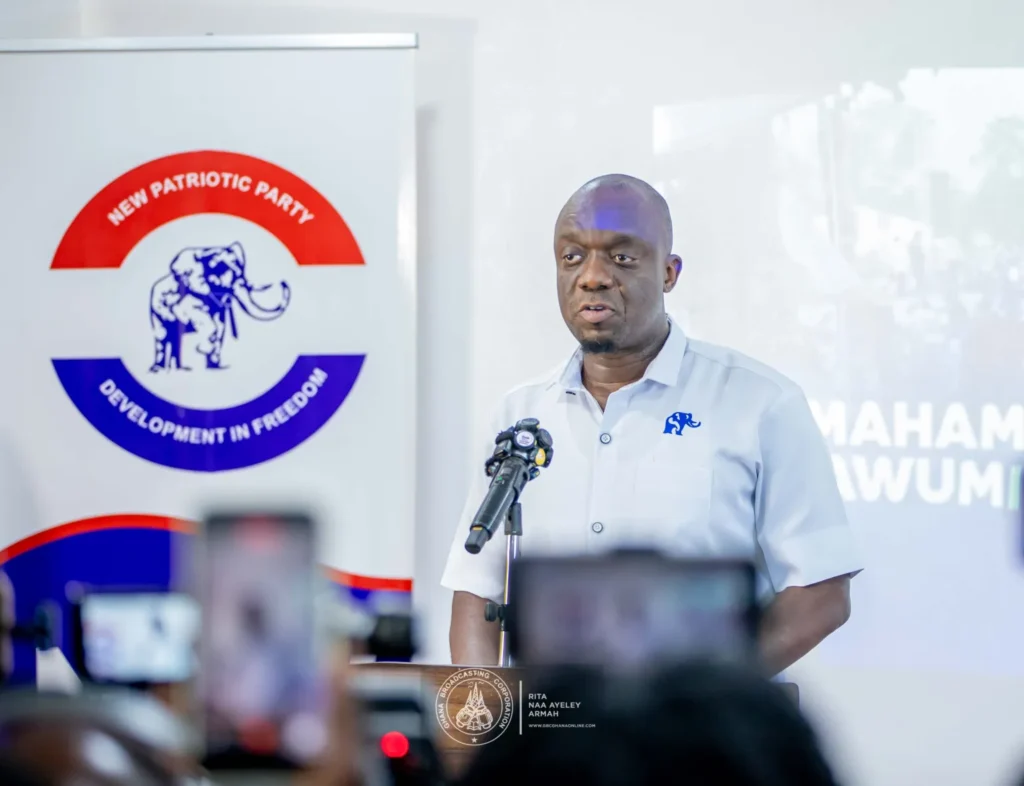
The opposition New Patriotic Party (NPP) has scheduled its national executive elections for September 18 to 20, 2026, after completing the nominations, vetting, and appeals processes in August.
This is part of a comprehensive roadmap guiding the party’s 2026 internal elections.
The General Secretary of the New Patriotic Party, Justin Kodua Frimpong, made the announcement at a press conference held at the party’s headquarters in Accra yesterday. He outlined detailed timelines, eligibility criteria, nomination fees, and supervisory structures spanning from the polling station level to the national stage.
He added that the roadmap forms part of the party’s broader reorganisation agenda aimed at strengthening its structures ahead of the 2028 general election.
Justin Kodua Frimpong explained that the process will begin with a mandatory nationwide membership registration exercise from March 1 to March 31, 2026.
He emphasised that the registration will be conducted strictly at designated polling station meetings, where members must personally enter their details into the official register.
He added that only members whose names appear in the validated register and who have paid their dues for at least one year will be eligible to vote or contest in the subsequent internal elections.
After the registration phase, the New Patriotic Party will organise polling station elections in April and May 2026.
Polling station, electoral areas
Nominations for polling station executive positions will open from April 20 to 24, with voting set to take place between April 25 and 30.
He noted that aspirants seeking polling station roles must reside within the electoral area, be registered voters with the Electoral Commission, and demonstrate active membership in the party.
NPP outlines roadmap for internal elections
By Dickson Worlanyo Dotse | Politics | Feb 19, 2026
The opposition New Patriotic Party (NPP) will hold its national executive elections from September 18 to 20, 2026, following nominations, vetting and appeals processes scheduled for August.
The exercise forms part of a comprehensive roadmap for the party’s 2026 internal elections.
The General Secretary of the NPP, Justin Kodua Frimpong, announced this at a press conference at the party’s headquarters in Accra yesterday. He outlined detailed timelines, eligibility requirements, nomination fees and supervisory structures from the polling station to the national level.
He explained that the roadmap is also part of the party’s broader reorganisation agenda aimed at strengthening its structures ahead of the 2028 general election.
Membership registration
Mr Frimpong stated that the process will begin with a mandatory nationwide membership registration exercise from March 1 to March 31, 2026.
He stressed that registration will take place strictly at designated polling station meetings, with members required to personally enter their details into the official register.
Only members whose names appear in the validated register and who have paid their dues for at least one year will be eligible to vote or contest in subsequent internal elections.
Following the registration exercise, the party will conduct polling station elections in April and May 2026.
Polling station, electoral areas
Nominations for polling station executive positions will open from April 20 to 24, with voting scheduled between April 25 and 30.
Mr Frimpong indicated that aspirants for polling station positions must reside within the electoral area, be registered voters with the Electoral Commission, and demonstrate active membership in the party.
This will be followed by electoral area elections in late May and June 2026. Nomination forms for those positions have been pegged at GH¢50. Electoral area election committees will oversee the contests.
Constituency, regional levels
Constituency executive elections have been scheduled for July 2026. Nomination fees have been set at GH¢1,000 for constituency chairmanship, GH¢1,500 for parliamentary candidates’ representatives, GH¢1,000 for first and second vice-chairpersons, and GH¢500 for other positions.
Mr Frimpong explained that constituency elections will be conducted by a committee made up of national and regional representatives, the constituency council of elders, patrons and research officers, among others. At least one-third of delegates must be present to form a quorum.