
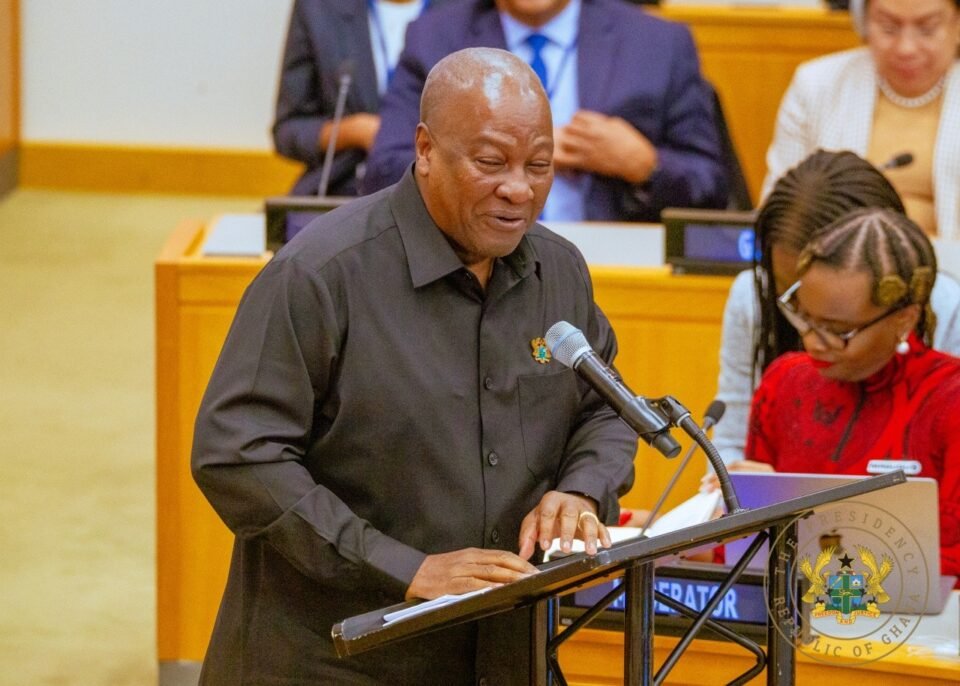
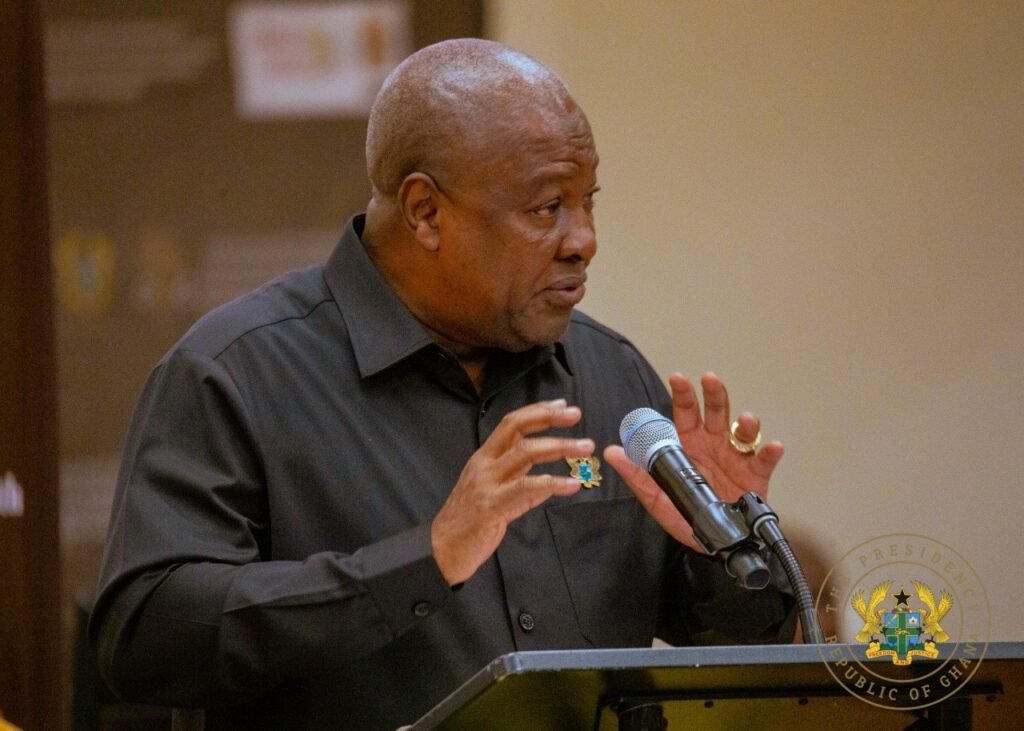
John Dramani Mahama has called on the global community to fully acknowledge the brutal realities of the transatlantic slave trade and pursue reparative justice as a means of healing, in a passionate address to world leaders.
Speaking at the United Nations Headquarters in New York City during the UN High-Level Special Event on Reparatory Justice, he opened his eight-page speech with a striking declaration: “There is no such thing as a slave.”
John Dramani Mahama elaborated on his assertion, explaining that those subjected to slavery were human beings who were forcibly trafficked and enslaved by individuals who presumed they could own others as property.
He stressed that this distinction is essential, noting that such a notion cannot stand if one truly recognises a person’s humanity and upholds their fundamental right to dignity.
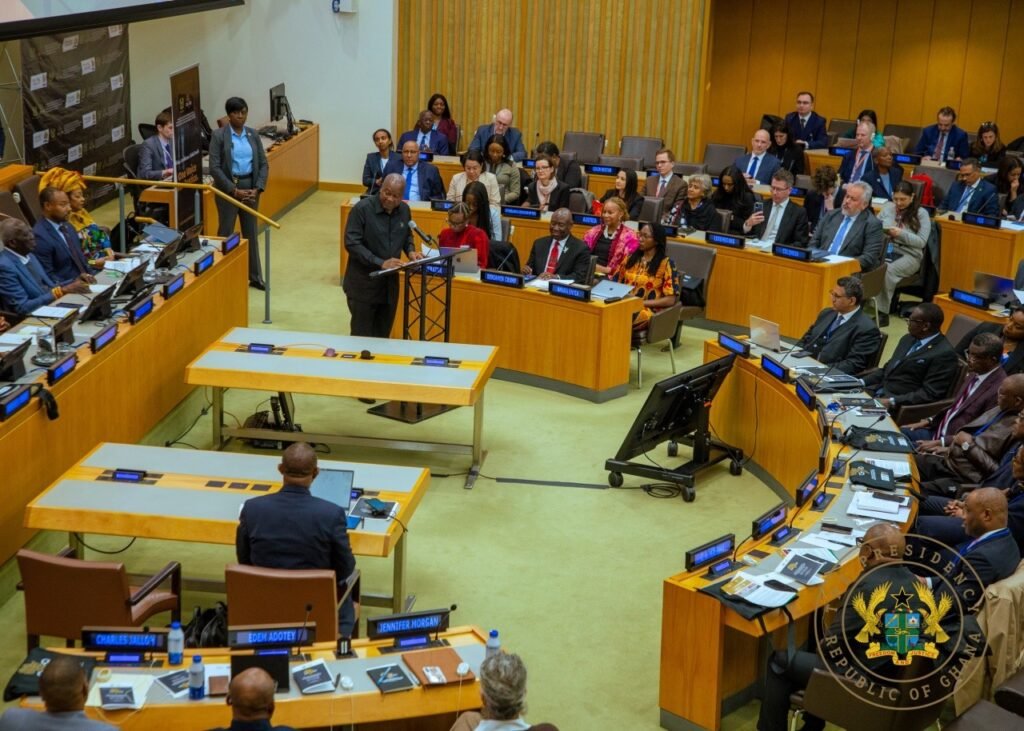
President Mahama further described the transatlantic slave trade as a system deliberately structured to strip African people of their humanity, built on a false racial hierarchy with no grounding in fact or science.
He underscored the need to reframe the conversation, stating that any discussion on slavery and its legacy must begin with reaffirming racial equality, restoring the dignity of Africans, and recognising the humanity of enslaved ancestors—as well as our shared humanity today.
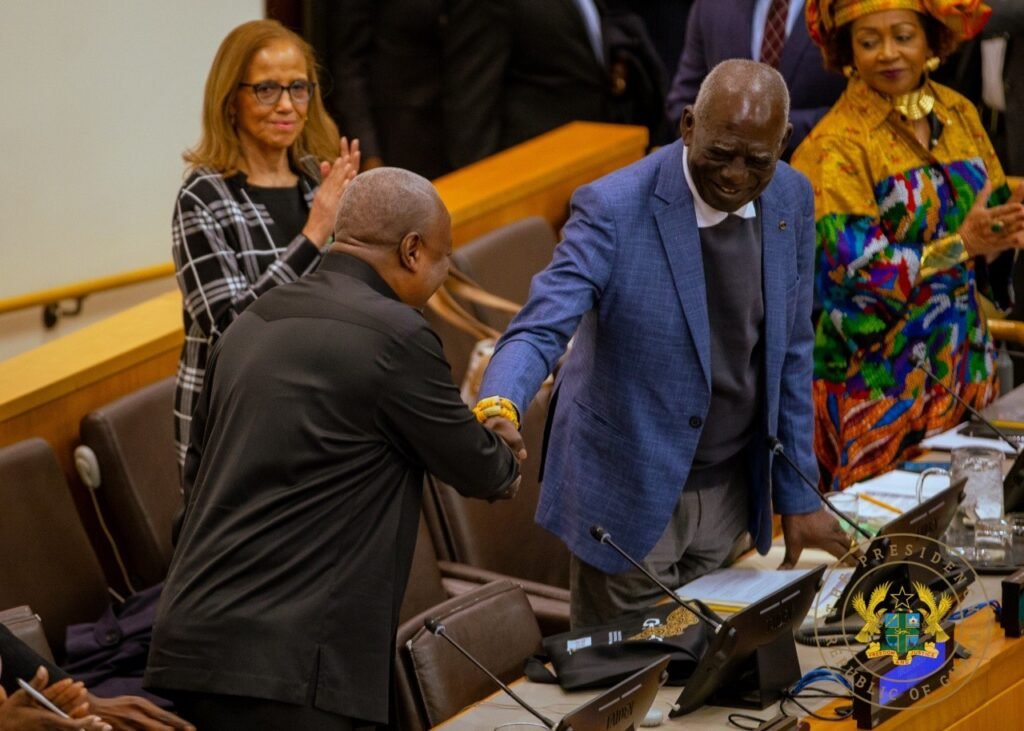
Tabling of Motion, Vote Expected Today
John Dramani Mahama’s address comes ahead of the formal presentation of the motion at the event, with a vote on the matter scheduled for today.
Although calls for reparatory justice for slavery and the transatlantic slave trade have been championed by various groups over the years, this marks one of the closest moments such a proposal has come to gaining decisive consideration at this level within a global forum such as the United Nations. For this purpose, President Mahama was named the African Union Champion on Reparations.
Rationale
President Mahama said the resolution offered the global community an opportunity “to collectively bear witness to the plight of the 18 million men, women and children whose homes, communities, names, families, hopes, dreams, futures and lives were stolen from them over the course of four centuries”.
He affirmed that the resolution was a pathway to healing and reparative justice, and a safeguard against forgetting the history of slavery and the slave trade.
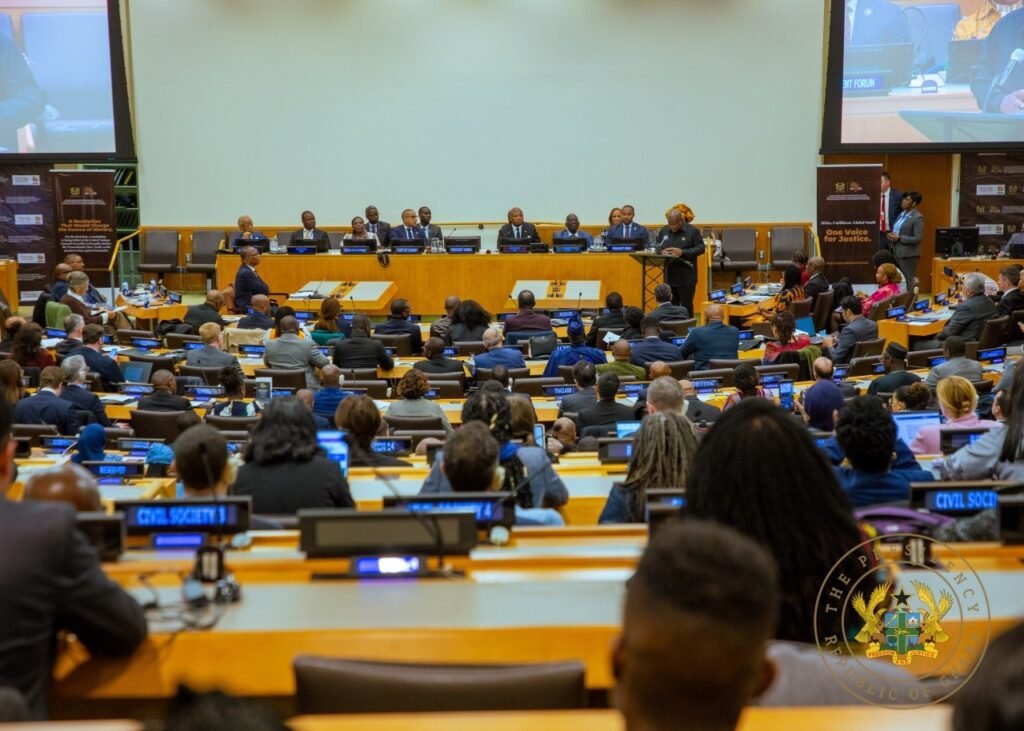
John Dramani Mahama recounted the brutal conditions under which many Africans were captured and enslaved, stressing the importance of acknowledging their suffering and restoring their dignity.
He noted that violence often begins with language, explaining how enslaved Africans were dehumanised through words and treatment. According to him, regardless of how they were captured, many were stripped naked and confined in dungeons within European-built fortresses before being transported across the Atlantic.
He described how they were shackled and forced into the cargo holds of ships, where they endured months-long journeys across the Middle Passage under inhumane conditions—packed tightly and deprived of basic dignity. While many survived the journey, others resisted in despair, with some choosing death over bondage by jumping overboard, while others perished when ships sank.
President Mahama revealed that between 10 and 15 percent of enslaved Africans died during the Middle Passage. Those who survived were taken to markets upon arrival, where they were inspected, valued like livestock, and sold to the highest bidder. This process marked the beginning of the master-slave relationship, with many forced to adopt the names of their owners or reduced to degrading labels.
Highlighting the scale of the transatlantic slave trade, he noted that about six million enslaved Africans were taken to Brazil, while nearly two million were transported to Jamaica, one of the most profitable sugar-producing colonies at the time. He added that approximately 500,000 were taken to United States, where slavery played a central role in the nation’s early development, and over 450,000 were trafficked to Barbados.
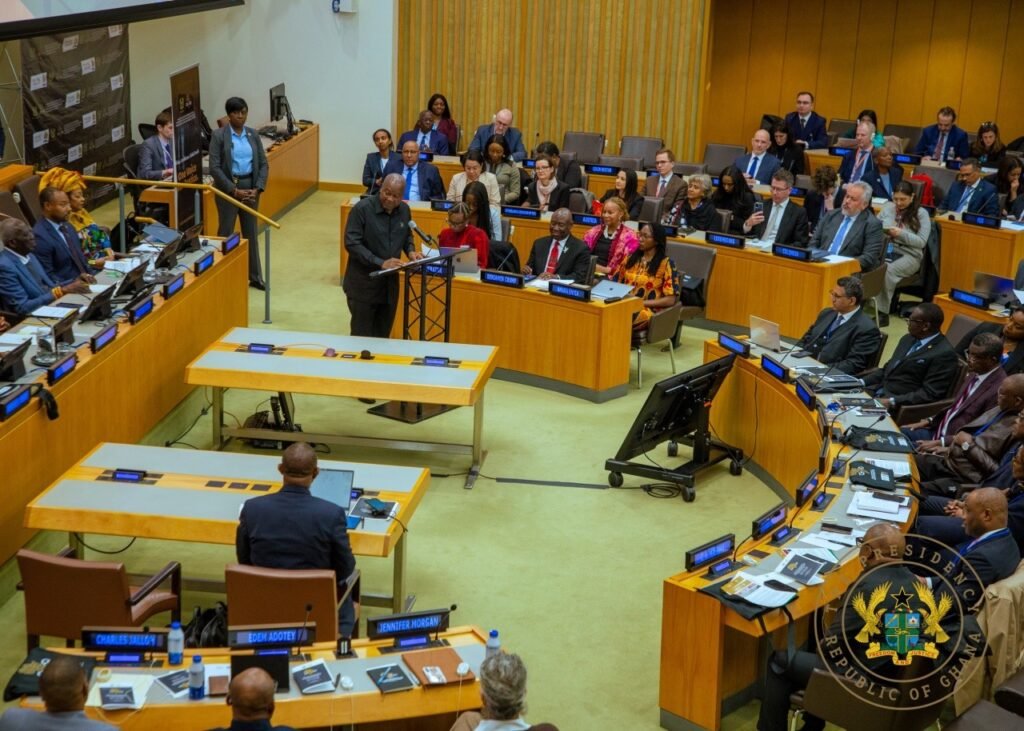
He further explained that before the widespread use of enslaved Africans, plantation labour in Barbados relied on white indentured servants, many of whom were Irish. Unlike enslaved Africans, these individuals were eventually granted freedom and could more easily escape and integrate into the wider population.
On the issue of racial justice, President Mahama urged a reframing of discussions on slavery, emphasising the need to reclaim racial equality, affirm the dignity of Africans, and honour the humanity of those who were enslaved. He rejected arguments that past actions should not be judged by present standards, insisting that wrongdoing remains wrong regardless of the era.
“Just because something was widely practised does not make it right,” he stressed, adding that slavery was unjust both in the past and today, and that there were always voices who opposed it.
He concluded by calling on leaders of the African Union member states to support the motion, urging them to take a stand for justice.
He expressed hope that the vote would lead to the passage of a historic resolution that fully acknowledges the atrocities committed against millions of Africans and affirms the truth about one of history’s darkest chapters.
