
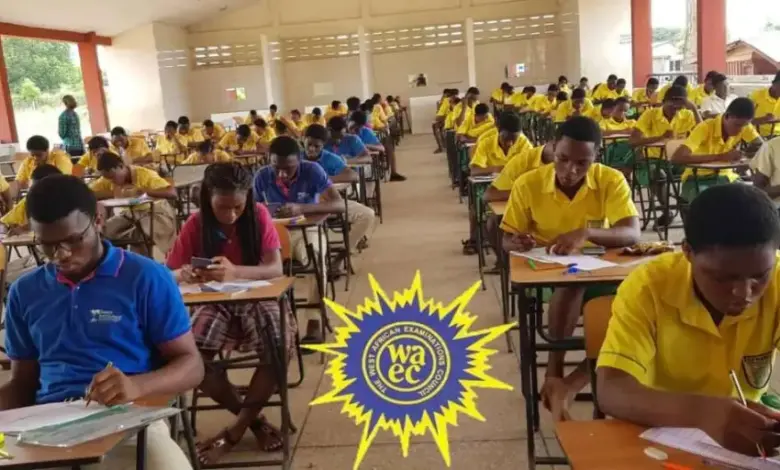
Final-year Senior High School (SHS) students in Ghana will join their counterparts across West Africa from tomorrow to sit for the May–June West African Senior School Certificate Examination (WASSCE) for School Candidates, starting with the Oral English paper.
A total of 509,862 candidates are expected to take part in this year’s examination nationwide, according to data from the West African Examinations Council (WAEC) made available to the Daily Graphic. The figure comprises 225,274 males and 284,588 females.
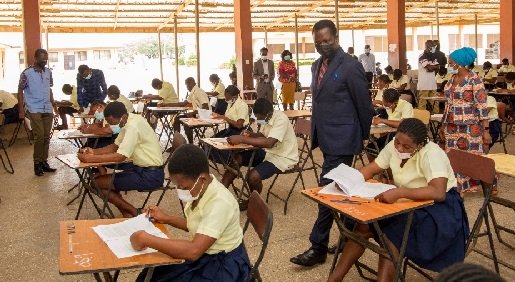
The 2026 examination season has already commenced with practicals and project work in subjects such as Visual Arts and Home Economics. However, all candidates will write the Oral English paper tomorrow, a component Ghanaian students have undertaken exclusively over the past five years.
The WASSCE calendar had previously been disrupted due to the COVID-19 pandemic, which pushed the 2020 exams to between July 20 and September 5, and the 2021 exams to August 16 through October 8. Since then, WAEC member countries — including Nigeria, Liberia, Sierra Leone, and The Gambia — have worked to restore the traditional May–June schedule.
Regional Breakdown
The Ashanti Region records the highest number of candidates, with 127,702 students, made up of 57,885 males and 69,817 females. The Eastern Region follows with 70,099 candidates (29,810 males and 40,289 females), while the Bono, Bono East, and Ahafo regions together account for 67,739 candidates, including 29,658 males and 38,081 females.
The Central Region has 61,303 candidates, while the Greater Accra Region will see 48,099 candidates — comprising 22,418 males and 25,681 females — sit for the exams.
In the Volta Region, 41,622 candidates (19,261 males and 22,361 females) will participate, while the Oti and Western North regions together have 35,620 candidates, including 14,480 males and 21,140 females.
The Northern sector — covering the Northern, North East, and Savannah regions — has 33,155 candidates. The Upper East Region will present 15,192 candidates (6,093 males and 9,099 females), while the Upper West Region has the lowest number, with 9,249 candidates (3,985 males and 5,266 females).
